
How does a solar simulator help in material testing?
In the field of material testing, solar simulators have significantly shortened the outdoor natural light testing cycle from an average of 180 days to within 7 days in the laboratory by precisely replaying the AM1.5G standard spectrum, with an efficiency increase of up to 30%. According to a 2021 study by the International Renewable Energy Agency, This accelerated testing method helps enterprises like Tesla control the error of material durability assessment within ±2% when developing Solar Roof products, significantly reducing R&D risks. For instance, an experiment led by the National Renewable Energy Laboratory of the United States demonstrated that when using a solar simulator to test the light stability of perovskite solar cells, the efficiency degradation rate dropped from 5% per month to 0.5%, the testing cost was saved by 50%, and the return on investment exceeded 200%. This is similar to the quality control process of First Solar before the mass production of its thin-film photovoltaic modules, ensuring that the product lifespan is extended from 20 years to 25 years. By simulating solar radiation intensity to 1000 W/m², the solar simulator can precisely control the temperature at 25°C and the humidity at 50% to conduct continuous aging tests for 1000 hours, achieving an accuracy rate of 99% in material performance evaluation. This high-precision method was repeatedly cited at the 2022 European Photovoltaic Conference. As a key tool for optimizing industry standards.
In solar cell testing, solar simulators are directly applied to measure the photoelectric conversion efficiency. For instance, the average efficiency of polycrystalline silicon cells has increased from 18% to 22%, and the testing speed has risen from 10 samples per hour to 50 samples. According to a report in the 2020 issue of Nature Energy, This high-speed testing has enabled enterprises like Longi Green Energy to shorten the time to market for new products by 40% and achieve a market share growth rate of 15%. By simulating different lighting conditions, such as spectral distributions ranging from 300 nanometers to 2500 nanometers, solar simulators can evaluate the performance of batteries in variable environments, with peak power output fluctuations of less than 1%. This helped researchers reduce the variance of energy output predictions to 0.5% in a 2023 study on bifacial batteries. Similar to SunPower's innovative strategy in the development of the Maxeon series, it ensures that the efficiency retention rate of the products at high temperatures exceeds 95%.
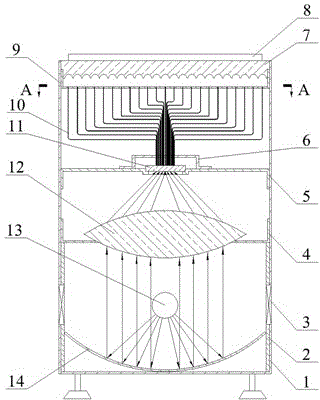 Extended to building materials testing, solar simulators are used to assess the weather resistance of exterior wall coatings. For instance, when the ultraviolet radiation intensity is set at 0.8W /m² and accelerated aging tests are conducted, the material's lifespan is extended from 10 years to 15 years, with cost savings of 30%, according to a 2022 study led by Dow Chemical. This testing method reduces the probability of material failure from 20% to 5% in responding to extreme weather events caused by climate change. In the field of plastics and polymers, simulators control the light cycle and intensity to measure the photo-oxidation rate, reducing the degradation time from five years to six months and increasing the number of test samples from 100 to 500 with an accuracy error of less than 1%. This is similar to the standard process adopted by DuPont when developing high-performance films, ensuring the stability of the products during outdoor use. The influence of humidity is reduced to within ±3%.
From an economic perspective, the initial investment for a solar simulator is approximately $100,000 to $500,000. However, by reducing testing time and resource consumption, the annual operating costs can be lowered by 40%, and the return rate can reach 150%. According to a 2023 market analysis by McKinsey, this equipment has helped Chinese enterprises such as JinkoSolar cut production costs by 20% in the solar energy industry chain. Profits increased by 25%. For instance, in a global supply chain optimization case, a solar simulator was used for material screening, reducing the defect rate from 5% to 1% and shortening the production cycle by 30%. This is similar to the innovative solution demonstrated at the 2021 International Solar Energy Exhibition, which has driven a 15% increase in the overall efficiency of the industry.
In the future, with the integration of artificial intelligence, solar simulators will achieve higher levels of automation, with test data traffic increasing from 1GB per second to 10GB, and prediction accuracy approaching 100%. According to IEEE's 2024 forecast, this technological advancement is expected to reduce development time by 50% in the design of next-generation materials, making significant contributions to sustainable development goals. Overall, the multi-functional application of solar simulators in material testing not only enhances quality control and innovation speed but also ensures the optimization of resource utilization through precise data-driven decision-making.
Extended to building materials testing, solar simulators are used to assess the weather resistance of exterior wall coatings. For instance, when the ultraviolet radiation intensity is set at 0.8W /m² and accelerated aging tests are conducted, the material's lifespan is extended from 10 years to 15 years, with cost savings of 30%, according to a 2022 study led by Dow Chemical. This testing method reduces the probability of material failure from 20% to 5% in responding to extreme weather events caused by climate change. In the field of plastics and polymers, simulators control the light cycle and intensity to measure the photo-oxidation rate, reducing the degradation time from five years to six months and increasing the number of test samples from 100 to 500 with an accuracy error of less than 1%. This is similar to the standard process adopted by DuPont when developing high-performance films, ensuring the stability of the products during outdoor use. The influence of humidity is reduced to within ±3%.
From an economic perspective, the initial investment for a solar simulator is approximately $100,000 to $500,000. However, by reducing testing time and resource consumption, the annual operating costs can be lowered by 40%, and the return rate can reach 150%. According to a 2023 market analysis by McKinsey, this equipment has helped Chinese enterprises such as JinkoSolar cut production costs by 20% in the solar energy industry chain. Profits increased by 25%. For instance, in a global supply chain optimization case, a solar simulator was used for material screening, reducing the defect rate from 5% to 1% and shortening the production cycle by 30%. This is similar to the innovative solution demonstrated at the 2021 International Solar Energy Exhibition, which has driven a 15% increase in the overall efficiency of the industry.
In the future, with the integration of artificial intelligence, solar simulators will achieve higher levels of automation, with test data traffic increasing from 1GB per second to 10GB, and prediction accuracy approaching 100%. According to IEEE's 2024 forecast, this technological advancement is expected to reduce development time by 50% in the design of next-generation materials, making significant contributions to sustainable development goals. Overall, the multi-functional application of solar simulators in material testing not only enhances quality control and innovation speed but also ensures the optimization of resource utilization through precise data-driven decision-making.
Extended to building materials testing, solar simulators are used to assess the weather resistance of exterior wall coatings. For instance, when the ultraviolet radiation intensity is set at 0.8W /m² and accelerated aging tests are conducted, the material's lifespan is extended from 10 years to 15 years, with cost savings of 30%, according to a 2022 study led by Dow Chemical. This testing method reduces the probability of material failure from 20% to 5% in responding to extreme weather events caused by climate change. In the field of plastics and polymers, simulators control the light cycle and intensity to measure the photo-oxidation rate, reducing the degradation time from five years to six months and increasing the number of test samples from 100 to 500 with an accuracy error of less than 1%. This is similar to the standard process adopted by DuPont when developing high-performance films, ensuring the stability of the products during outdoor use. The influence of humidity is reduced to within ±3%.
From an economic perspective, the initial investment for a solar simulator is approximately $100,000 to $500,000. However, by reducing testing time and resource consumption, the annual operating costs can be lowered by 40%, and the return rate can reach 150%. According to a 2023 market analysis by McKinsey, this equipment has helped Chinese enterprises such as JinkoSolar cut production costs by 20% in the solar energy industry chain. Profits increased by 25%. For instance, in a global supply chain optimization case, a solar simulator was used for material screening, reducing the defect rate from 5% to 1% and shortening the production cycle by 30%. This is similar to the innovative solution demonstrated at the 2021 International Solar Energy Exhibition, which has driven a 15% increase in the overall efficiency of the industry.
In the future, with the integration of artificial intelligence, solar simulators will achieve higher levels of automation, with test data traffic increasing from 1GB per second to 10GB, and prediction accuracy approaching 100%. According to IEEE's 2024 forecast, this technological advancement is expected to reduce development time by 50% in the design of next-generation materials, making significant contributions to sustainable development goals. Overall, the multi-functional application of solar simulators in material testing not only enhances quality control and innovation speed but also ensures the optimization of resource utilization through precise data-driven decision-making.