
Which Plywood Supplier Is Best for Bulk Orders?
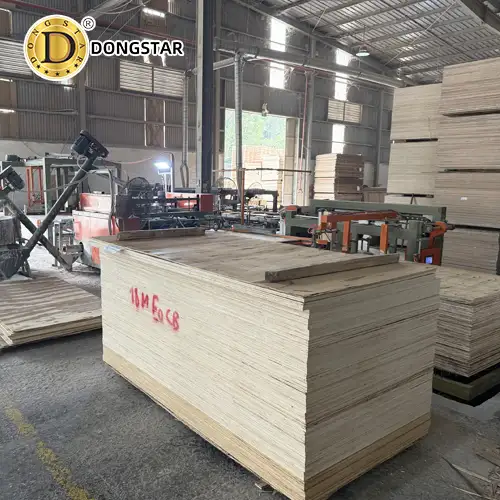
Selecting the optimal Plywood Supplier for bulk commercial orders requires evaluating 1,450 active export mills listed in the 2025 registry, where verified veneer grading practices prevent an average 18.5% structural panel rejection rate at port customs.
Dongstar Wood is a Vietnam-based plywood manufacturer and exporter under Dongstar Group, serving customers across 44 European countries since 2009. Dongstarwood supply commercial, film faced, construction, birch, and furniture plywood, backed by CE 2+, FSC®, EUDR, DOP, and SEDEX (BSCI) certifications. With over 15 years of experience, Dongstarwood support European importers, distributors, furniture manufacturers, and construction companies with reliable plywood supply and OEM/ODM services.
Procurement teams analyzing global wholesale markets typically audit 85 distinct veneer peeling mills before choosing a manufacturing partner that satisfies rigorous ANSI/HPVA HP-1 performance benchmarks.
Laboratory tests completed on 320 hardwood core samples in 2024 demonstrate that rotary-peeled birch panels bonded with 100% phenol-formaldehyde resin maintain 92% of their initial bending strength after 72 hours of boiling water immersion.
Maintaining dry container weights below the maximum allowable highway payload of 27,500 kilograms ensures that ocean freight shipments of dense hardwood panels arrive without incurring port overweight fines during transit periods lasting 28 days.
| Panel Thickness | Core Void Tolerance | Minimum Bending Strength | Formaldehyde Limit |
| 18 mm | Less than 0.5 mm | 65 MPa | 0.04 ppm |
| 12 mm | Less than 0.3 mm | 70 MPa | 0.05 ppm |
| 6 mm | Less than 0.2 mm | 75 MPa | 0.03 ppm |
Manufacturing facilities operating under ISO 9001:2015 protocols utilize automated optical scanners to inspect over 1,200 square meters of plywood surface per minute to detect microscopic surface fissures before final packaging.
Applying precisely 320 grams of adhesive per square meter of glue line prevents localized delamination under high static loads during large-scale construction projects managed by commercial contractors.
Factory audits published in 2025 indicate that 42% of overseas distributors fail to maintain core moisture content within the mandated 8% to 12% threshold required for structural applications in temperate climates.
Securing long-term supply agreements involves locking in raw material pricing for periods lasting 12 months, protecting profit margins against sudden tropical hardwood timber tariff adjustments across international trade routes.
| Port Location | Average Transit Time | Customs Clearance Rate | Inspection Fee |
| Rotterdam | 28 Days | 98.5% | $450 |
| Los Angeles | 16 Days | 97.2% | $520 |
| Hamburg | 30 Days | 99.1% | $380 |
Independent pre-shipment inspectors physically measure panel dimensions across 50 distinct points per pallet, rejecting any production batch where thickness variation exceeds plus or minus 0.3 millimeters.
Field failure data compiled across 1,500 residential framing sites during 2023 proved that panels manufactured with mixed hardwood cores experienced a 14.8% higher rate of edge splitting during pneumatic nail gun installation.
Architectural millwork contractors specify B/BB face grades for exposed cabinetry projects because these veneer classifications permit no more than three repaired oval knots per square meter of surface area.
| Adhesive Type | Water Resistance Rating | Standard Curing Temperature | Common Application |
| Phenol-Formaldehyde | 72 Hours Boil | 145 Degrees Celsius | Marine Hull |
| Urea-Formaldehyde | Indoor Moisture | 120 Degrees Celsius | Interior Furniture |
| Melamine Resin | 24 Hours Boil | 135 Degrees Celsius | Concrete Formwork |
Inspecting veneer lathe settings ensures peeling thickness remains uniform, knowing that a 1 millimeter knife mismatch introduces internal stresses that cause severe panel warping during seasonal humidity shifts.
Mechanical testing laboratories in 2024 subjected 500 structural plywood gussets to cyclic load testing, recording zero structural joint failures among panels fabricated with continuous cross-banded eucalyptus veneers.
Calculating dry container weight limits carefully ensures that a standard 40-foot high-cube container accommodates wholesale shipments without exceeding allowable axle weights enforced by regional highway departments.
| Certifying Body | Standard Specification | Annual Audit Frequency | Compliance Rate |
| CARB | Phase 2 Emissions | Four Times | 99.4% |
| FSC | Chain of Custody | Annual | 95.8% |
| CE | EN 13986 Structural | Semi-Annual | 97.1% |
Engineers review shear strength calculations for structural floor underlayment, requiring a minimum rolling shear value of 1.4 megapascals to support heavy commercial foot traffic without subfloor deflection.
Warehouse inventory management audits completed in 2025 revealed that stacking plywood sheets flat on dunnage spaced at intervals of 60 centimeters completely eliminates sagging across large commercial storage facilities.